TECHNOLOGY FOR AQUAFEED AND PET FOOD PRODUCTION
The right formulation of complete diet for fish or pets is highly important. Such processes as cooking, shaping, pretreatment and post treatment contribute to overall performance.
Extrusion technology maximizes aqua feed digestibility and conversion rates.
Every business based on farm fish feed production are familiar with the fact that the main key is the proper rations of the final feed mixture and obtaining the optimal solubility of the aqua feed which is achieved due to careful feed processing.
In pet food production extrusion helps to achieve higher digestibility of feed. When making a good pet food nutritional value is the priority but also attractive visual characteristics are important.
APPLICATION
- well-balanced feed in pellet form
FINAL PRODUCTS
- Floating, sinking and slowly sinking AQUAFEED
- PET FOOD
RAW MATERIAL
- soybean meal, sunflower meal, animal components, grains and cereals of wheat, rye, maize, barley, peas, as well as complex mineral supplements and soy flour etc.
OPERATING CONDITIONS
- power line in the workshop: from 250 kW
- production premises area: from 350 m²
- raw material warehouse area: from 300 m²
- storage area for the ready product: from 300 m²
TECHNOLOGY DESCRIPTION:

STEP № 1. FEEDSTOCK PREPARATION
Blending, mixing and grinding
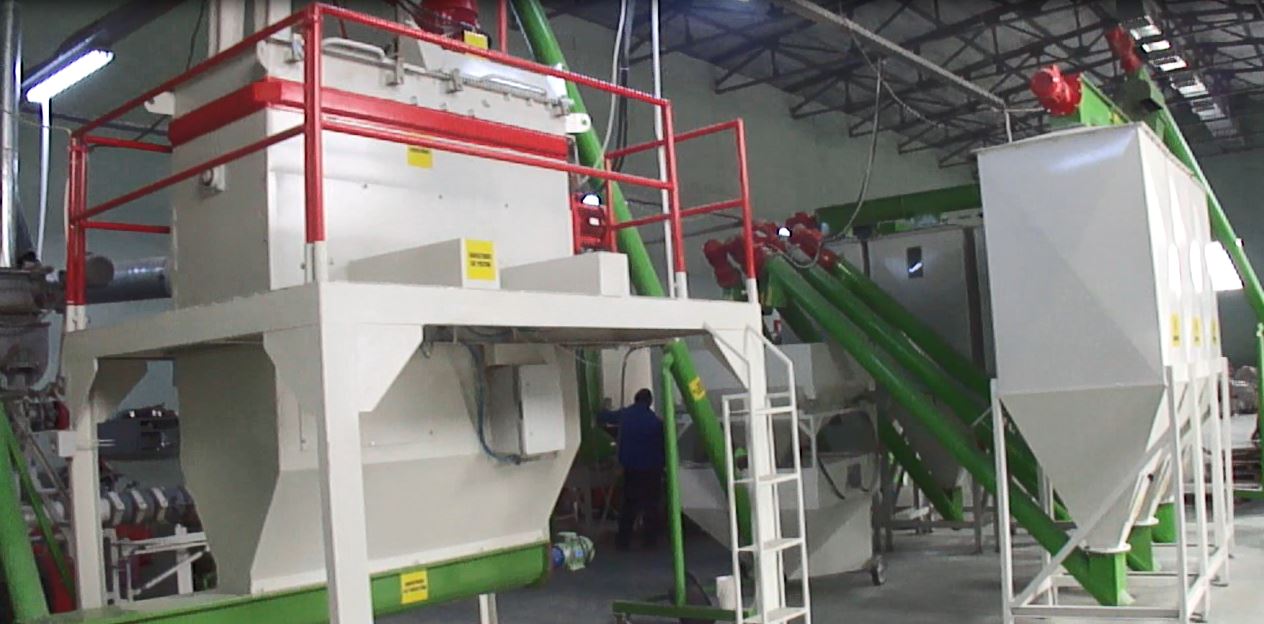
The components are crushed in the sieve hammer mill to dimension size of 6 mm.
Afterwards the ingredients are fed to the weight mixer, then the mixture components are cut with a sieve crusher to the size of 2 mm and continuously fed into the operative hopper.
Please, pay attention to the technological input limitations:
- fat content of the mixture prior the extrusion process: max 8%
- fiber in the mixture prior the extrusion process: max 25%
- moisture of the mixture prior the extrusion process: 12-25%
- non-functional protein*: max 25%
Unlimited input:
- functional proteins **
- starch components
STEP № 2. OPERATION IN EXTRUDER
From the operative hopper the feedstock is moved into the preconditioner of the extruder E-1500.

At this stage the feedstock has been heated up properly and safely up to 60-70°C.
The feed mixture enters the extruder's screw barrel; where the mixture is being heated up to 70-120 °C.
The general process should be taken place on gentle treatment modes to preserve the qualities of protein-vitamin supplements.
The cooking time should be up to 40 seconds only.
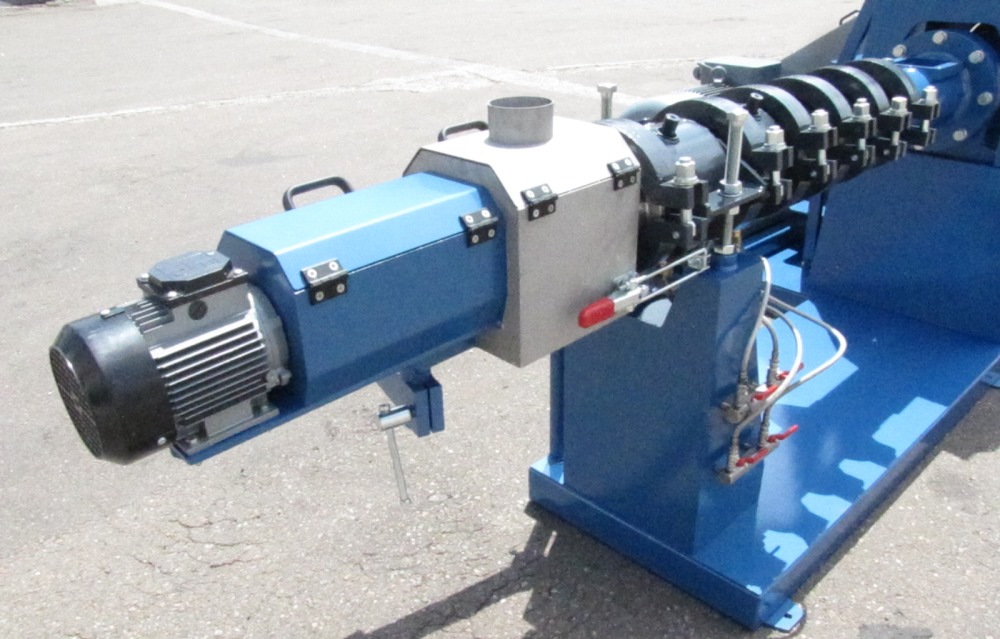
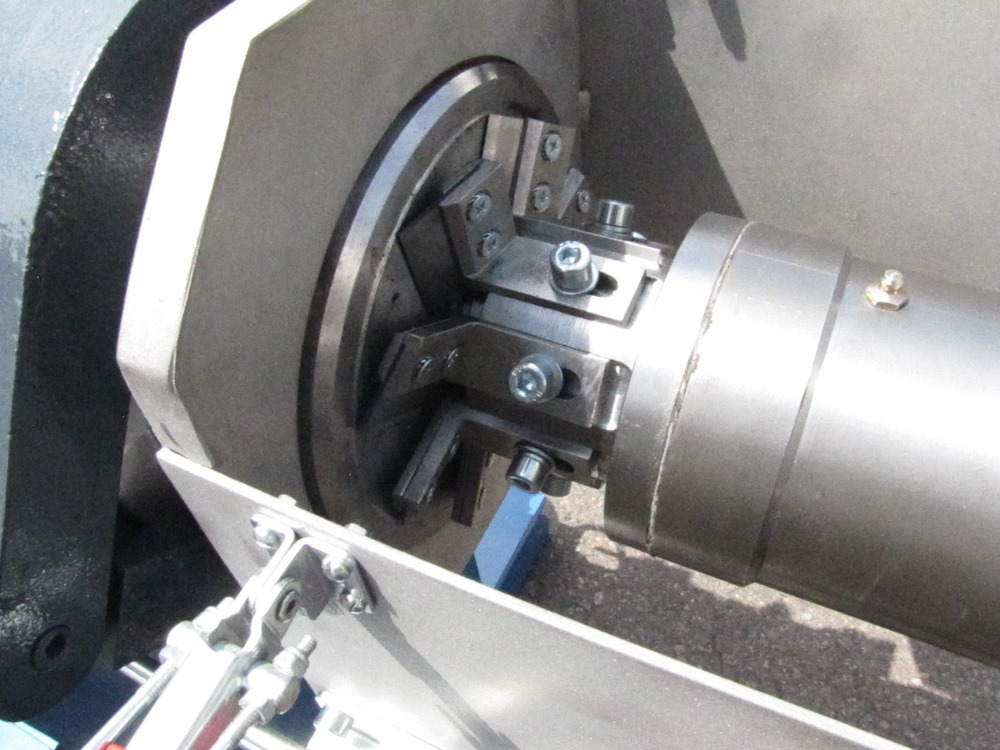
At the discharge section due to the instantaneous change of pressure we obtain the uniform feed pellet. Its size depends on the diameter of the outlet holes of the die, and the length is determined by the frequency of rotation of the cutter knives.
STEP №3. DRYING
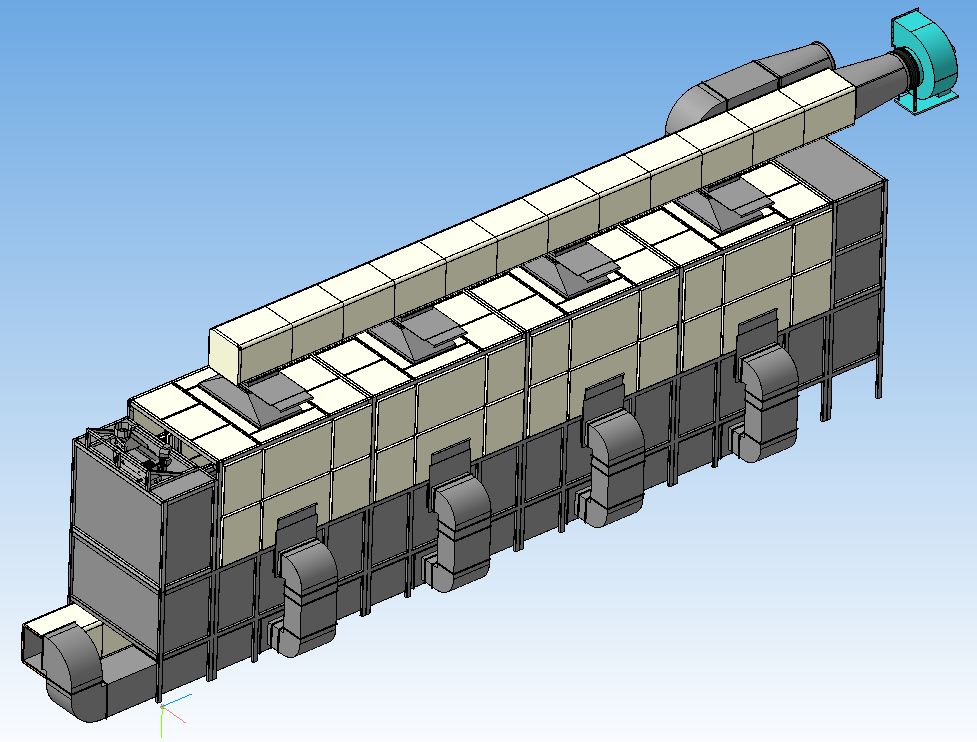
After being discharged from the extruder the feed pellets have the moisture of 20-25%, next they are fed into the belt dryer for cautious drying.
The temperature of drying should be less than 120 °С
STEP №4. APPLICATION OF FAT & ATTRACTIVES
When the fat content of the mixture is 8% the feed pellet is easily formed inside the extruder.
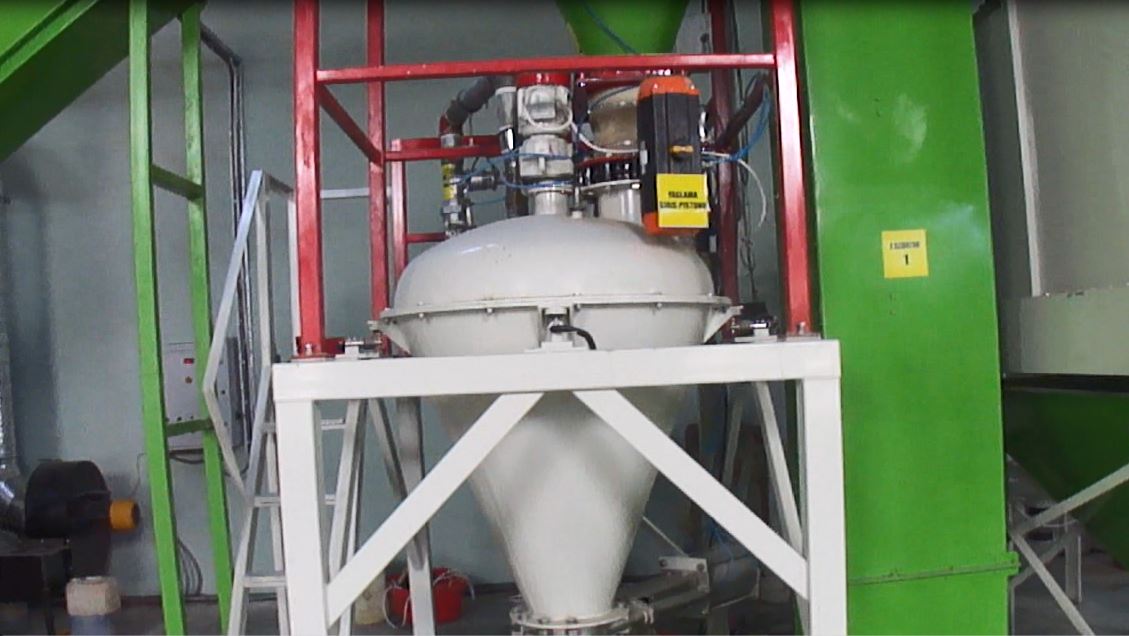
For instance if the feed formulation is supposed to contain 18% of fat, it means that the fats are applied on feed pellets in the drum or the disc coaters.
If the formulation has a fat content higher than 18%, the fats are applied with the help of vacuum coaters.
Dry additives are applied simultaneously.
allows adding 30% of fat (to obtain feed pellets with fat content of 15 ... 35%) apply 3 different liquids and 1 dry additive uniform degree of absorption and penetration of fat inside the pellets
STEP №5. PREPARATION PRIOR FEED STORAGE
After the coating process we get the feed pellets with temperature up to 60 °С
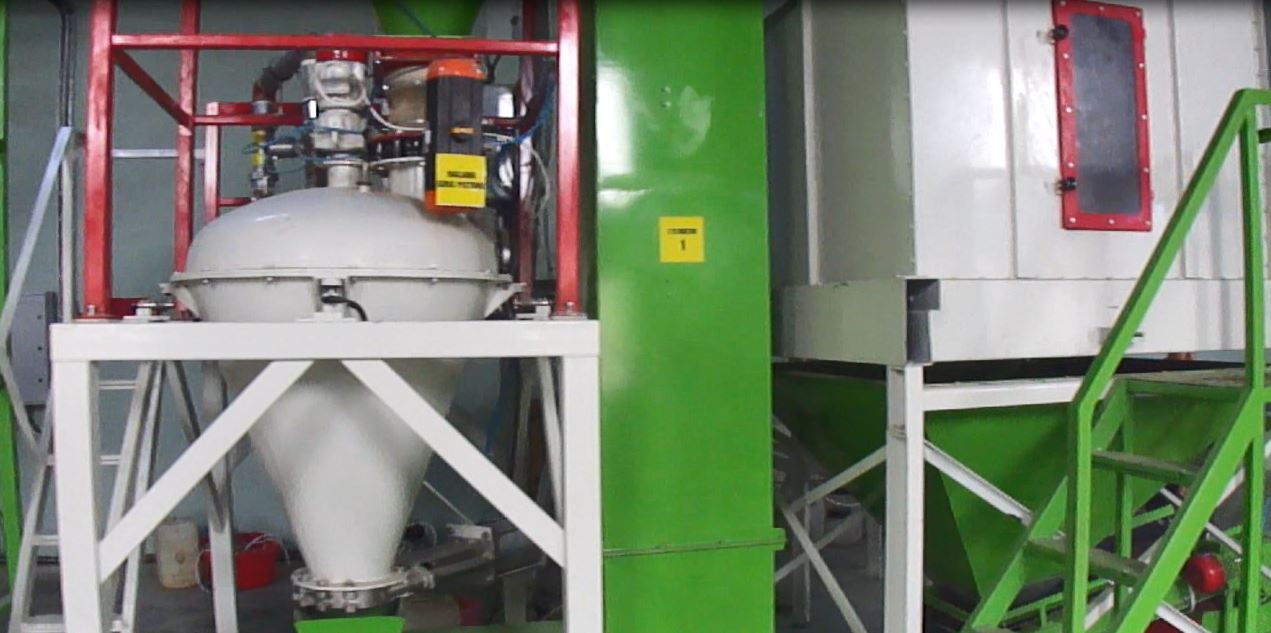
The ready pellets are fed into the cooler to make the temperature down up to 20 (+/-5) ˚С
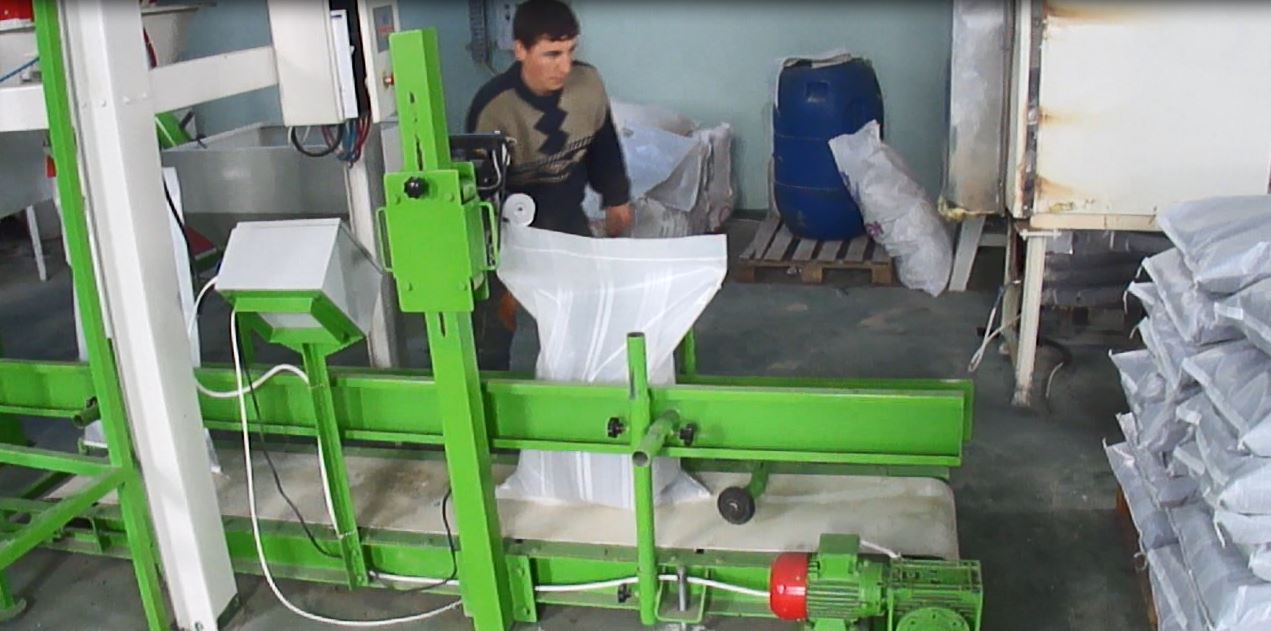
After being cooled down the pellets are transported into the packaging machine.